Petit Choux: One Day More
Watch 'em run amuck. Catch 'em as they fall. Never know your luck when there's a free for all


Internet ephemera from the tennis world and beyond. Have something you want to include? Join the Discord – we have a really nice and active community growing there – or hmu on Bluesky.
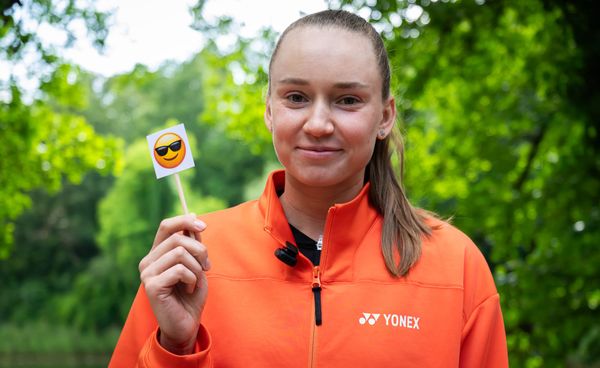
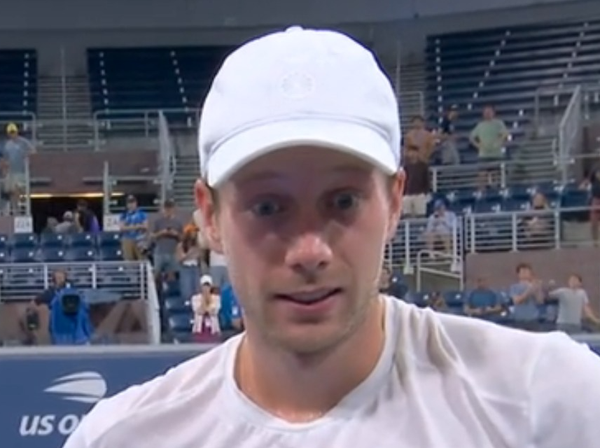
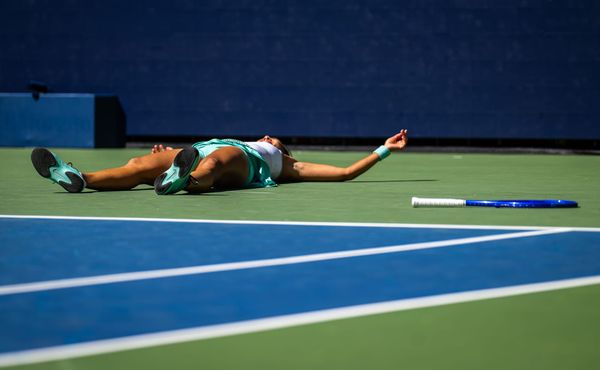
- Here are your weekend winners: Learner Tien in Geneva (2nd career title), Ignacio Buse in Hamburg (1st), Emma Navarro in Strasbourg (3rd), and Petra Marcinko in Rabat (1st).
asking daddy how to do this, to then be showered 😭
— Ann 🦩 (@maisonpq) May 23, 2026
I’m dying here, how did he get here? I’m gone pic.twitter.com/yECkSfnRiv
- Roland Garros begins on Sunday. I’ve got my eyes on Baptiste-Krejcikova, Kenin-Stearns, Tagger-Wang Xinyu, Stephens-Bejlek, Bergs-Machac.
- Relevant links: Order of Play | Draws | Live Scores
- I’m not part of the team this year but Radio RG remains – in my humble opinion – the best Grand Slam radio team. Plucky, scrappy, hilarious and just a fun all-day listen. Gigi, Marcus et. al. will be live every day starting at 10:30 am until last ball an you can tune in via the RG app or on the RG website.

- There will be no more media protests from the players at Roland Garros after the FFT agreed to present a counter-proposal in the coming weeks. This means the players will be back to doing media with the tournament’s rights holders. (Guardian)
The players are understood to have been heartened by Friday’s meeting, which included three representatives of the FFT, the players’ representative, Larry Scott, and a group of player agents. Sources involved described as positive talks as vindicating their media boycott. One said one day of direct action had achieved more than a year of discussions behind the scenes.
The FFT has promised to return with detailed proposals within a fortnight of the finals at Roland Garros, with the players adamant an increase in prize money must take place alongside discussions over welfare and player representation.
Nike execs have answered our prayers and signed Hailey Baptiste to a head-to-toe sponsorship deal. She previously had an in-kind deal with them, meaning she got free clothing but wasn’t paid. pic.twitter.com/NjlVtgOSDR
— Jessica Schiffer (@jessicaschiffer) May 23, 2026
- Arthur Fils is out of Roland Garros. My immediate reaction to that news was to see what Carole Bouchard had to say about it. (The Tennis Sweet Spot)
Fils didn’t really reassure anyone on Saturday as it seemed he didn’t really know himself what exactly was wrong. It’s a hip injury picked up during the training week in Rome. But also, it might not be only the hip. And also, the exams done on that injury sounded conclusive, but weirdly, Arthur’s pain level hasn’t been decreasing. And then, it might not only be the hip, as it could also be the lower back or the psoas. I fully understand that Fils coming to say he cannot play because of a back injury was an optics nightmare: It’s a business, and the kid has signed some pretty big deals. So he was adamant to make it clear that it wasn’t like last year. There was no way anyone would leave the room to write Fils’ back was acting up again.
- Simon Cambers looks back on Sue Barker’s 1976 Roland Garros win. Yep, that was 50 years ago. (The Guardian)
- This is crazy:
When Ash Barty won the French Open in 2019, she became the first Australian woman to do so since Margaret Court in 1973, but as she scanned the list of names on the trophy, she was surprised to see that Barker was also listed as an Australian. In a 2022 interview with BBC Sport, Barker said she did not care too much. “I think it’s because I used to play so much in Australia that people used to think I was Australian,” she said. “There weren’t that many British players on the clay. But it doesn’t really bother me, I knew I’d won it.” At the time, embarrassed tournament organisers vowed to make the necessary correction, but the French Tennis Federation did not respond to the Guardian when asked if the alteration has been made.
"Serve!" created by artist Christoph Niemann pic.twitter.com/PSFJDr3TLI
— PmAmTraveller (@pmamtraveller) May 20, 2026
- From Nadal to Jodar, here’s how Spain keeps doing it. (The Guardian)
Many trace the origin story back to the early 1970s. The country’s dictator Francisco Franco, inspired by Manolo Santana, the first Spaniard to win a grand slam, ordered the construction of thousands of red clay courts throughout Spain, literally building the infrastructure that laid the groundwork for what was to come.
Though it took a generation, the coaching techniques and training regimens put in place 50 years ago in Spain have now become standard practice for players from around the world.
The two coaches who were the most instrumental in developing the Spanish brand of men’s tennis in the 1980s and early 1990s were Pato Alvarez (now deceased), and Lluis Bruguera (the father of the aforementioned Sergi), who is in his 80s and still coaching.
Both based in Barcelona, they developed a style of coaching that Chris Lewit, author of the book The Secrets of Spanish Tennis, narrowed down to six tenets: movement, footwork and balance; racket speed and weapon building; consistency; defense; physical conditioning; and, finally, the importance of suffering.
Qinwen said during RG media day that Pere Riba's absence was due to a car accident he had in Barcelona. His neck wasn't able to move, but he'll be back with the team today in more of an advisor role. pic.twitter.com/bzCA92yc4e
— 元气豆沙包 (@hoppang121) May 23, 2026
oof. get well Pere!
- The Career Grand Slam is right there for Jannik Sinner. (The Guardian)
Multiple things can be true at once. Sinner is performing at such an incredibly high level in practically every match he contests, but it is difficult to recall a less impressive field of challengers. Alexander Zverev, the second seed, has now lost nine consecutive matches against Sinner along with 14 sets in succession. It is remarkable that Djokovic, who defeated Sinner to reach the Australian Open final in January, is still a contender. However, having turned 39 years old on Friday, he has accordingly struggled to remain healthy all year. Aside from Medvedev, the rest of the top players are either in poor form, at their least effective on clay, or simply levels below the standards set by Sinner each week.
Things could scarcely be any more different in the women’s field, a draw that is overflowing with contenders. The current top 10 remains one of the strongest and deepest in years and, among them, so many good players are capable of winning the title. Nine of the top 10 players currently hold a grand slam or WTA 1000 title.
- Nice interactive layout for The Athletic’s very thorough French Open preview.
- Reem Abulleil catches up with Mayar Sherif, who is finding her joy once again. (The National)
- A reminder that not all the players were are united on this prize money protest. As evidenced by Emma Raducanu’s words here:
Raducanu about the media protest: Why wouldn’t I want to talk to you for more than 15 minutes? [...] Playing a Grand Slam is not just about the money, it's about the prestige, history.
by u/Recent_Fox4339 in tennis
- To be clear, not all the players took part in the media protest. It was mainly confined to the ATP and WTA Top 10, with the only outlier being Novak Djokovic, who did not participate in the 15-minute protest but did send his unwavering support to the players. In a way, it’s Novak saying ‘Look, this has been my fight for years and I’m tired. This is now your fight.’ I honestly wonder if Novak also came to a realization, on some level, that his involvement made him the lightning rod, which isn’t fun personally – especially if it means antagonizing the very organizations you hope will be celebrating you upon your retirement – but also might not be great for the actual cause either. Novak is a polarizing figure. There is a not-so-small segment of the public that would see Novak support something and automatically assume that thing was a goofy thing to support, without looking at the merits. So yeah, I actually think Novak stepping aside is a good thing, for him and for the players. Especially when he continues to vocally support their cause:
Q. Just your view on the 15-minute protest. What's your opinion? Are you partaking in it? Are we on the clock?
NOVAK DJOKOVIC: No, I'm not part of that. I cannot comment in terms of something I was not part of. I haven't been part of that. I haven't been part of the process of, the conversation or the planning or the decision-making.
So I can't comment on that, to be honest. But what I can do is reiterate my own position that I have said many times before, that as a player, which has been my primary role in this sport for so many years, I have always been on the players' side and tried to advocate for players' rights and better future for players, but not only top players, players across all rankings, across all fields, particularly the Tier 1 professional tennis, the players on both men's and women's side that are lower-ranked, that are often forgotten about.
You know, we tend to – when I say "we," I mean including media and all of the intra-sides of the tennis world at the highest level – talk about the prize money cuts and how much are the top players earning or not earning, but we tend to forget how little is the number of people that live from this sport.
So I will never stop mentioning that or talking about that, because it is "the" most important field of the tennis professional circuit, that foundational top Tier 1 level for the future of this sport. If we want to nurture the future, if we want to have the players thrive from this sport, not just survive, and if we also want to increase or improve the sport as a whole and increase the number of the kids who want to enroll themselves into a journey of becoming a professional tennis player, then we have to discuss about, for me at least, the more important topic, which is how do we grow sport in a grassroot level. For that, that's not only question of the players expressing their content or discontent. I think it's us as a whole.
Grand Slams, governing bodies, the governing tours, everyone. We are very fragmented. It's already complex enough as a sport, how the structure is set and how we are regulated. So the further fragmentation is really hurting me personally. I really don't like to see that.
But, yeah, let's see and let's learn also from golf, you know. I think golf is a good example of professional individual global sport that has been through and is still going through very challenging times in terms of the governance and splitting tours and players, and they are able to participate in only one tour, if they go to another, we have seen what's happening.
So let's learn from that. Let's try to be a bit more united and have a unifying voice into finding better structure and better future for our sport, because now is the right time.
- I know it’s apples to oranges here, but Novak’s perfect response on this made Emma’s flippant take more discouraging. The media protest, for the most part, only pertained to the Top 10 – thought other former Top 10 players did opt in as well, like WTA Player Council member Maria Sakkari – but that a thoughtful concession from the Top 10 that they were the ones with the platforms and the ones whose media restrictions would hurt the FFT the most. It was also a tacit admission that media coverage is significantly more important/meaningful to lower-ranked players, who may not always have a chance to sit down with the press to get their stories out there.
- Regardless of her ranking, Emma is one of tennis’ marquee players. She commands the ever-beloved British market, one that is thirsty over every and any word she says – or doesn’t say. (The Daily Mail)
- In my perfect world – which I fully and full-throatedly acknowledge is NOT the real world – Emma would have taken the opportunity to discuss, if not the low revenue split, but at least the plight of the lower-ranked player. Or perhaps the importance of fighting, with an acknowledgement of the great battlers that came before this generation, from Billie Jean King to Venus Williams. This is a great opportunity to lean into your star power and flex it to help benefit the collective player body. That’s not what happened. But it would have been nice if it did. Because frankly, what does it cost you?
- That said, it’s probably not a coincidence that Emma wasn’t all in given how close she is with Mark Petchey, who has also been skeptical of the players’ position. Tim Henman has also reportedly been working behind the scenes to get ahead of all this pay dispute in time for Wimbledon. So maybe the conversation is just different in England. (Yahoo; Guadian)

- To that end, Simon Briggs takes a very skeptical look at the protest and the players’ demands. And, frankly, he’s not wrong. Yes, there is a grievance. But, and this is my constant question as well: what are you going to do about it? (The Telegraph via Yahoo!)
If anything, Friday’s lame press-room shenanigans in Paris will only embolden the tournaments, by demonstrating that they have nothing to fear.
But let’s take a step back from the famously dysfunctional mechanisms of tennis governance, and ask a wider question: are the players actually underpaid?
A couple of harsh truths here. Firstly, tennis remuneration follows a hockey-stick graph, with Sinner (£14m prize money in 2025) and Sabalenka (£11m) vastly exceeding the top-100 averages on their two tours (£1.3m and £900,000 respectively). This might seem unreasonable, but it makes a certain sort of sense. There are precious few players – maybe half-a-dozen? – with enough clout and visibility to move the dial in terms of ticket-sales, sponsorship contracts or TV viewing figures.
Secondly, I am always suspicious of the idea that a certain number of players should be able to make a viable living out of the game. Two hundred men and the same number of women would be a reasonable number, some say. But why that specific figure? Surely the market should decide.
- And also, Simon brings up an oft-overlooked aspect of the “Well but we’re non-profit and the money goes into grassroots tennis” argument:
One recent analysis suggested that the “Big Four” nations, who benefit from the happy accident of staging tennis’s most profitable events, employ around 2,000 people behind the scenes of their tennis operations, mostly coaches and administrators. Meanwhile, perhaps 300 players make a viable living from the world tours.
So if you’re a player from Italy, Kazakhstan or Brazil, you’re coming to the majors and grinding down your knee cartilage in order to support four national development programmes, each of which is designed to make your country less successful at tennis.
- Like, if I’m a non-Slam Nation player, why is Lake Nona or the NTC my problem???

- I still think one of the strongest chess moves the Slams could make is ceding to the players’ demands re contributing to player pension, healthcare, and maternity funds. From a PR perspective, that would show the Slams are willing to make contributions that actually do impact lower-ranked players. That would also leave the outstanding financial demand to be prize money increases re the revenue split. That would mean the players would have to keep pounding the “we are underpaid” line. I think that’s an unfair framing because they’re not arguing they’re underpaid, they’re arguing they don’t get their fair share. But that’s a more nuanced and complex argument than a headline allows, which means they will be painted as greedy athletes, which doesn’t engender as much sympathy, as seen below.
The French Open has this year increased its total prize money by 9.5 percent, to $72.3 million (£53.8m), but the players say their argument is largely about proportionality, not quantity. Some fans, Assoun included, don’t see it that way.
“Given how much the top players earn, I don’t think it’s right for them to go on strike or ask for more money,” he said. “They’re already very, very well paid. Even if the tournament brings in more revenue, I don’t think that’s the point. If anything, I’d be fine with the early rounds being better paid, but for the top 10 to get more money — I don’t think that’s right.”
- Some thought on this vox pop, which is similar to the anecdotal stories I’ve heard about the comments to the L’Equipe article about the media protest which were very anti-player, which….what are you doing, France? I thought you’re pro-labor! You never met a labor strike you didn’t like! Bourgeoisie is literally YOUR word!
- (1) I am generally open to debating this topic but here’s my stance as of now: I get the players are wealthy and rich, but they are not “The Rich” here. They are far more akin to “The Workers”, a.k.a. the proletariat. They make their wages by selling their labor. We know this because when they stop playing, they no longer earn a wage. At that point they may become the “The Owners” via other business endeavors that put them in an ownership position, but generally speaking, when they’re playing, they are the proletariat and tournament owners are the bourgeosie. I suppose you can argue maybe that they’re managerial class or petit bourgeoisie, but I still see them as workers.
- And since that’s the way I see it, I find it so weird when people are defending the four richest tournaments in the world to support the depression of wages. Nah man, I’ll pretty much always be in favor of workers getting as much money as possible. My critiques usually go towards how they plan on achieving it.
- (2) One of the biggest obstacles for the players is messaging. They’ve gotten better about this over the last four months, but I still get the sense that there are a group of players who absolutely know and understand what they’re talking about, and there is a group of players who are parroting talking points that would completely fall apart if they were pushed even in the slightest to speak more deeply on the topic. And that fragility shows.
- One thought that keeps simmering in my mind: when we talk about “a living wage” for a professional tennis player, what exactly is the number we’re talking about? And before you start with the “WELL THEY HAVE TO PAY THEIR TRAVEL AND COACHES” let me be clear: I’m talking about what is the number that a player would cite as a “take home” living wage. Deep down, I do worry that the number they’d cite would make a lot of normal working people say “Wait…what?” What do you think that number should be?
- Anyway, I’m so sick of talking about this lol. So I’m happy we won’t need to for another – checks watch – five weeks.
- Bop of the Day: It doesn’t take much to get me to launch into this rendition in its entirety: